A piece from her Cages series came to the workshop. We framed it loud. There is a smaller class of decisions where the frame argues, this was one.
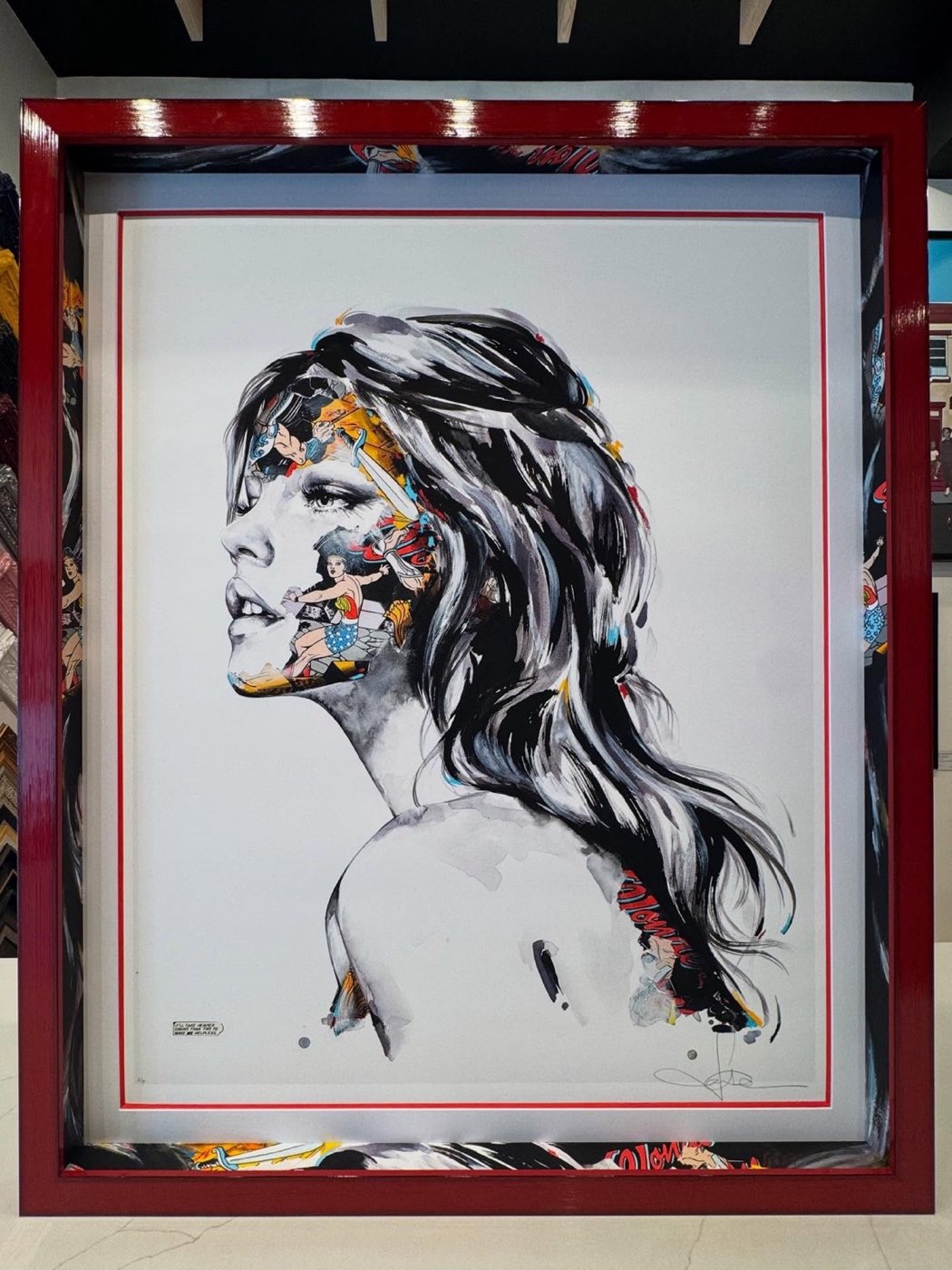
Sandra Chevrier is a Quebec-based painter whose work places female figures behind the panels of vintage comic books. The figures look up through the page. The page becomes a mask. La Cage; Briser Les Chaînes is from 2020, and the piece came to our workshop with a question already loaded into it: how do you frame a contemporary work that is using a popular medium as a serious one? The wrong answer is to frame it like the popular medium. The right answer is harder.
Les Cages.
When the frame argues with the artwork.
Most framing decisions are about agreement. The frame agrees with the artwork. Quiet piece, quiet frame. Saturated piece, saturated frame. There is a smaller class of decisions where the frame argues. The frame says the artwork is something the artwork is reluctant to claim it is.
For Chevrier's piece, that meant a crimson lacquer outer moulding, deep gloss, the kind of finish you see on grand pianos and Buick interiors. Crimson is not a color the artwork carries. The piece is built mostly in cooler tones with the warmth held in the figure's skin. The crimson is exterior to the work. It is the frame insisting that the comic-page mask the artwork wears is being treated with the formality of a Renaissance portrait.
Inside the lacquer, we built a comic-textured liner. The texture is borrowed from vintage newsprint, hand-finished on linen, with a slight halftone pattern that picks up the source material the artwork is referencing. The liner is the agreement move. It says yes to the comic vocabulary the piece is built from. The lacquer is the argument move. It says the comic vocabulary is being used to make a serious painting.
The argument and the agreement live in the same frame, which is exactly the structure of the artwork itself.
From the workshop bench
When the frame should push back.
Hung, Chevrier's piece pulls the eye from across the room. The crimson reads first. Then the figure. Then the comic mask. Then the texture of the liner. The frame did what it was meant to do, which is set the order in which the artwork unfolds.