
A small, dense print on a wall built for bigger pieces. Two frames stacked: an inner that holds the print, an outer that holds the inner.
Floyd Strickland's Schoolboy2 came through the workshop last fall. The piece is small, a tight composition of a young Black student in school dress. Strickland is a Los Angeles-based painter whose subjects are drawn from his childhood in Watts, and whose work sits in a lineage that includes Kerry James Marshall and Aaron Douglas, two artists Strickland has named as primary influences. Schoolboy2 arrived as a print on archival paper, unframed, and the question we walked into was a familiar one: how do you give a small, dense work the room it deserves on a wall built for bigger pieces?
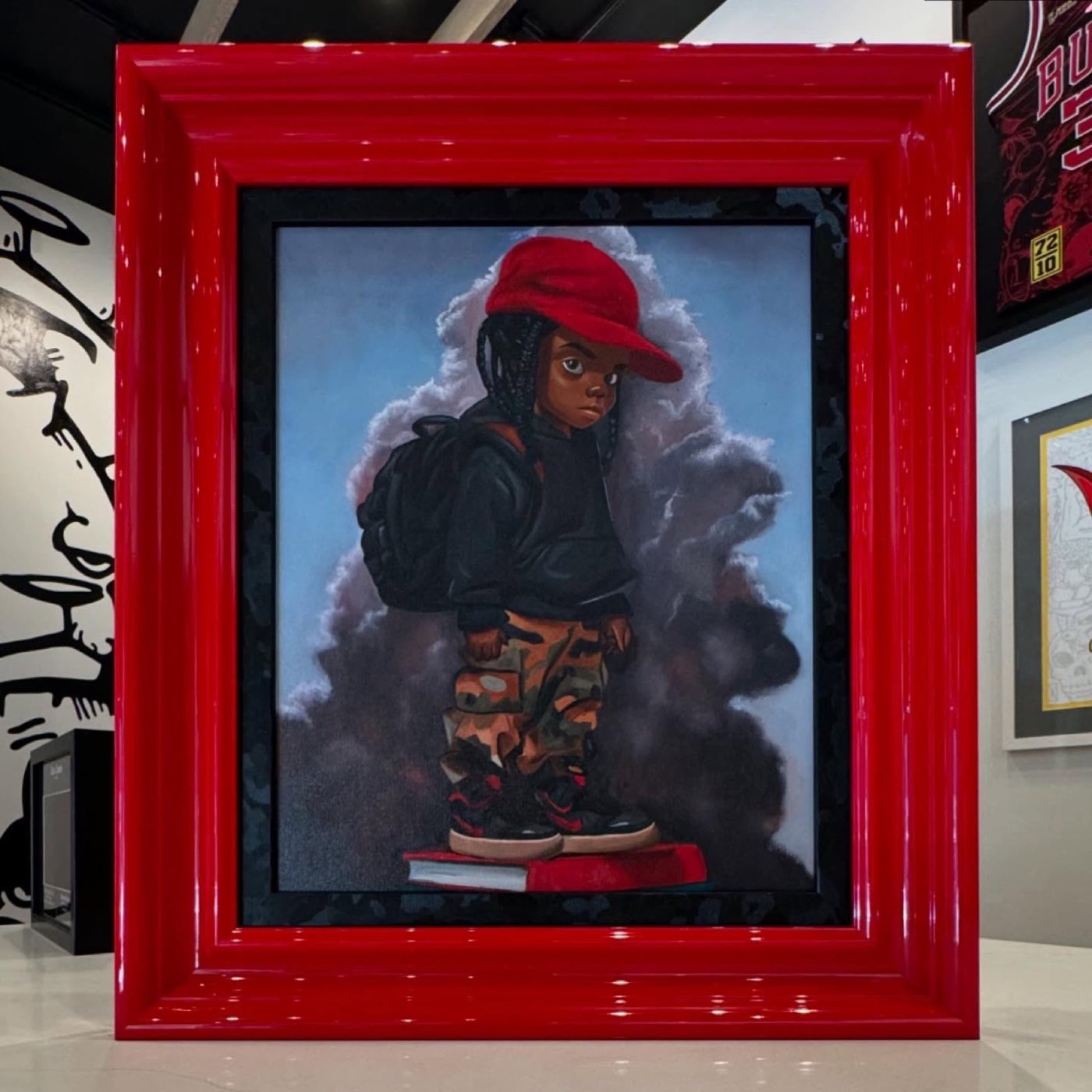
From Watts to Thinkspace.
Why we doubled up.
Most prints get a single frame. A moulding, a mat, glass, done. That is the right move when the artwork wants to dominate the space it sits in and the wall is willing to do half the work. Schoolboy2 was different. The composition is concentrated, almost compressed, and on a normal wall it would have read as a small thing in a big room.
We wanted it to feel like an object the wall was built around, not a thing the wall was tolerating. So we built two frames. An inner frame, dark and tight, that holds the print like a print. And an outer frame, wider and quieter, that gives the inner frame the breathing room a single mat could not.
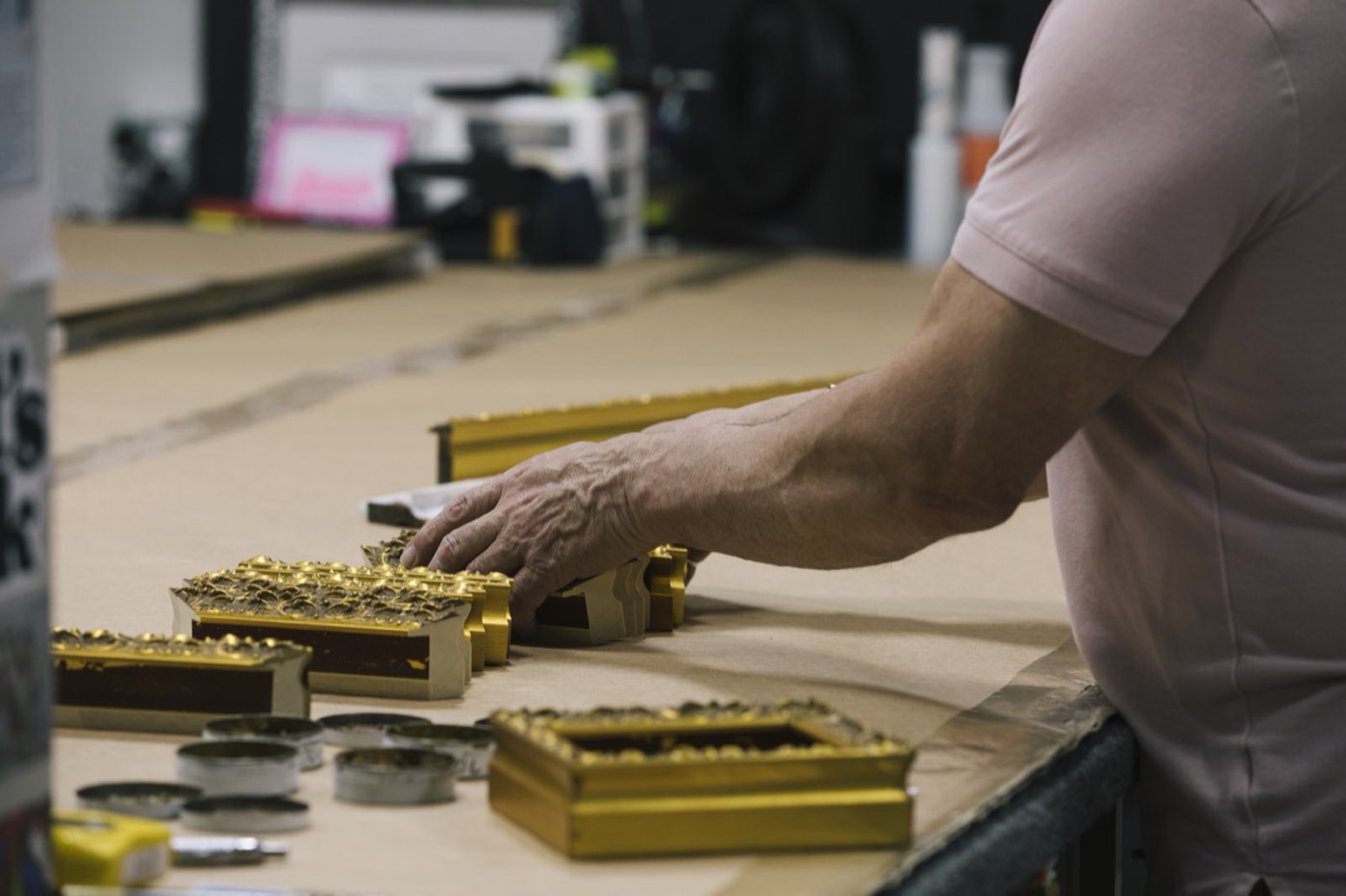
A double frame says: come closer.
From the workshop bench
Where this build belongs.
A double frame is not the right move for every print. It pulls the eye inward and slows the read. That is exactly what you want for a piece like Schoolboy2, where the composition rewards close looking and the subject is asking to be taken seriously rather than seen at a distance. It is the wrong move for a graphic, high-contrast piece that already wants to project across a room.
When to double up.
Hung, the piece reads exactly the way Strickland built it. A small, deliberate composition that earns its space.